
- in Production by Bobby Owsinski
6 Relatively New Microphones That Have Become Classics
While many believe that microphone technology hasn’t really improved in at least 30 years, a host of new mics have taken the technology to the next step. Some have even become classics in their own right and can be found as standard equipment in mic lockers the world over. In this excerpt from the 5th edition of The Recording Engineer’s Handbook, we take a look at a few of the new classic microphones.
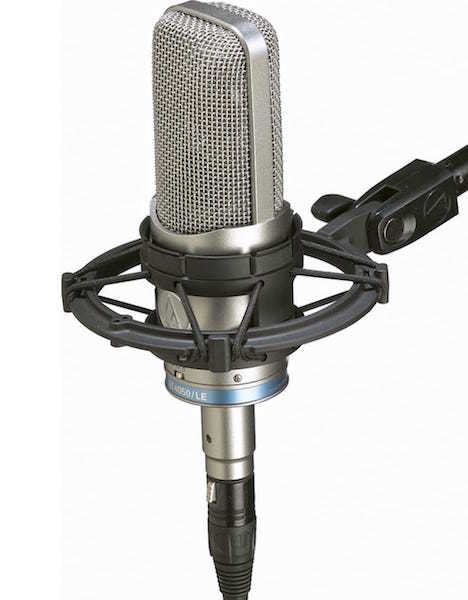
Audio-Technica AT4050/4033
The AT4050 is a large-diaphragm multi-purpose, multi-pattern condenser mic that’s found its way into mic lockers everywhere. It’s open and airy top end, low noise, and ability to take punishing SPL levels have made this a go-to mic when your usual favorite just isn’t cutting it. It’s also relatively inexpensive compared to the similarly featured German and Austrian favorites. The cardioid-only 4033 is a less expensive version of the same mic.
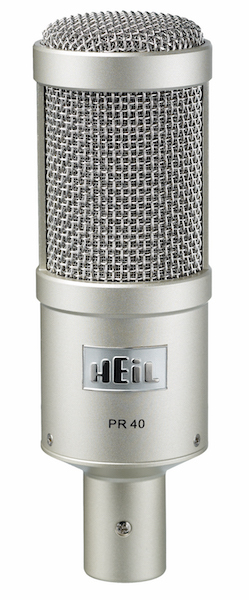
Heil Sound PR 40
Another new mic that has caught on as a kick drum mic is the Heil Sound PR 40. The PR 40 incorporates a large 1-1/8th-inch dynamic element for an extended low-frequency response as well as a presence bump from 2.5k to 4.5kHz. It’s also capable of handling very high SPL levels, and its super-cardioid pattern provides excellent back-side rejection. Many feel that the response of the PR 40 has sort of a “pre-EQ” built into it that makes EQing later either unnecessary or a lot more gentle than with other mics.
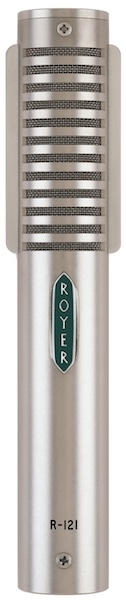
Royer R-121
Introduced in 1996, the R-121 is the first radically redesigned ribbon microphone in that it has a higher output than older ribbons, is a lot more rugged, and can take all the SPL you can hand it. You’ll see it used where the old favorite ribbons are used (overheads, brass), but in some new places too, such as kick drum and guitar amps.
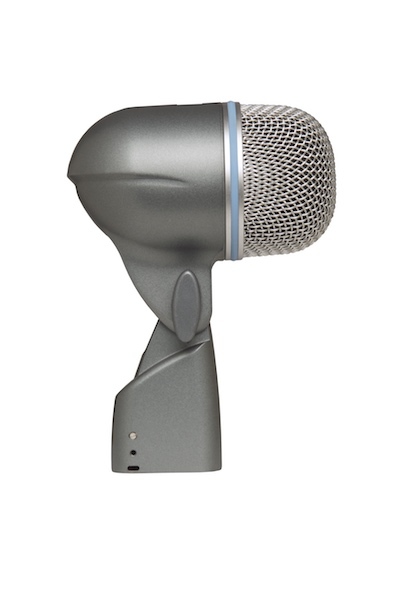
Shure Beta 52A
The Beta 52A (or B52, as some call it) is the first mic to give the revered AKG D 112 some competition as a kick mic. The mic is specially designed for kick and bass with an EQ curve built in to attenuate the 300 to 600Hz “boxy” frequencies and boost around 4 kHz for presence. It can also handle extremely high SPL levels up to 178dB.
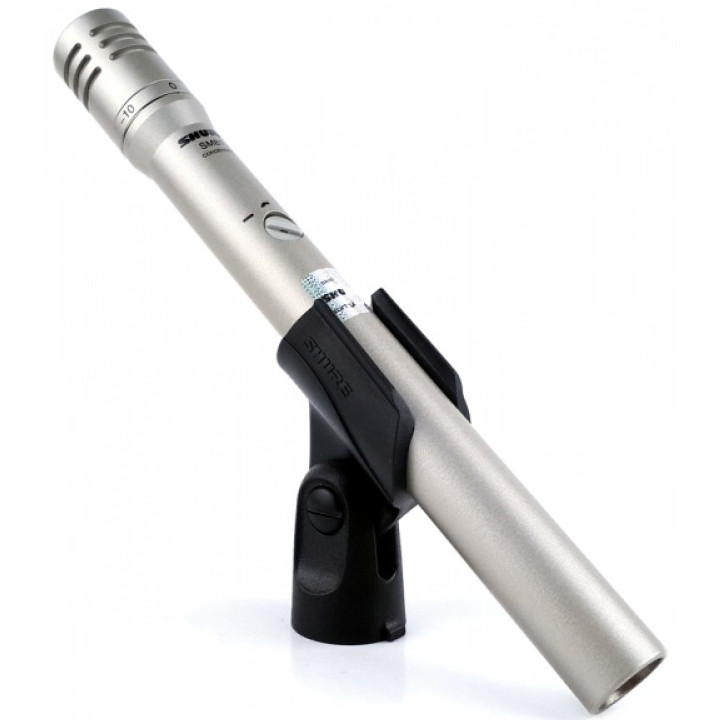
Shure SM-81
Although not truly a recent mic (it was introduced in 1978), the small-diaphragm SM81 condenser has been slowly building favor through the years, until it’s now often used whenever a small-diaphragm mic is called for. Known for its flat frequency response from 20Hz to 20kHz, low noise and RF susceptibility, the SM81 is ruggedly constructed and operates over a wide variety of temperatures. It has a built-in 10dB pad and a switchable flat 6 or 18dB per octave high-pass filter (see Figure 2.43).
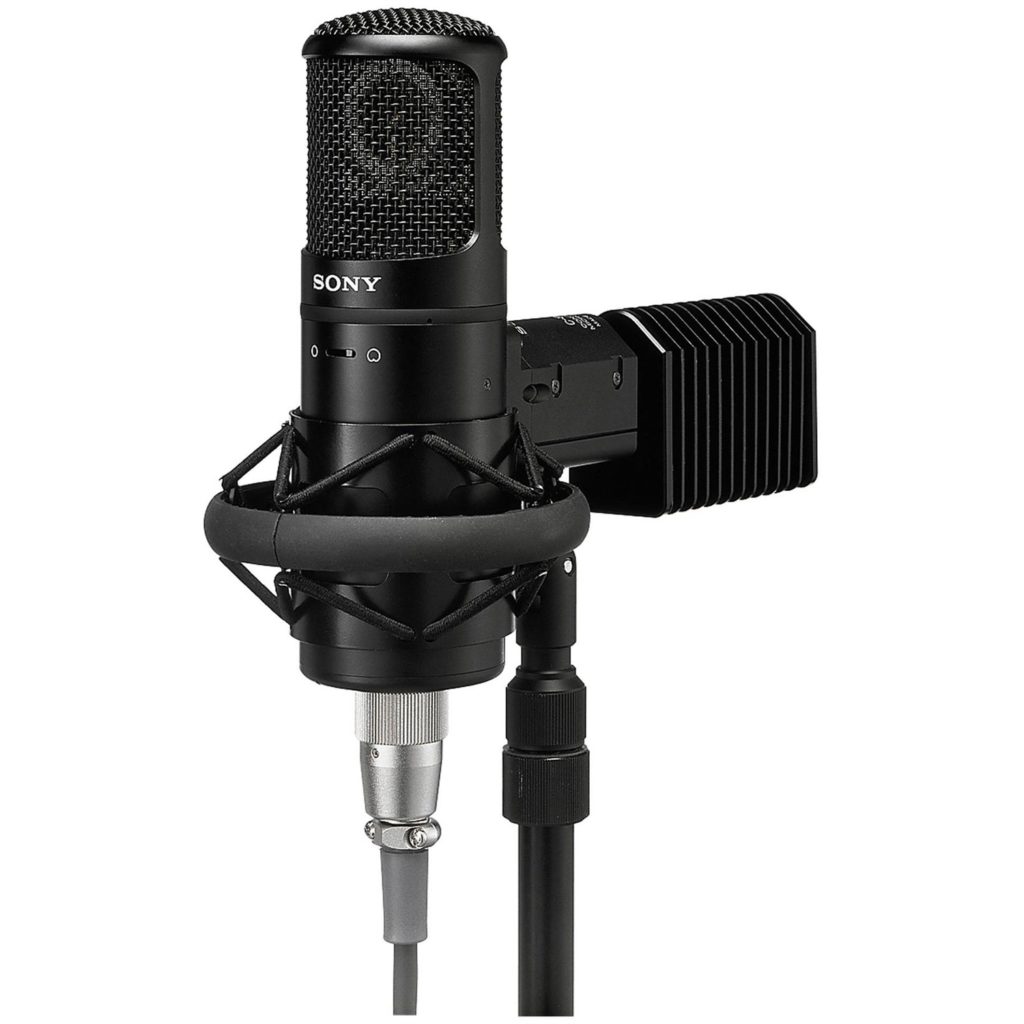
Sony C800G
Released in 1992, the tube-based Sony C800G took some time to be discovered, but once it was it soon became the go-to mic for rap, pop and R&B thanks to its bright, detailed sound. It’s unusual look comes from the fluid-filled finned cooling system at the mic’s rear that’s designed to reduce internal noise and eliminate distortion. It has two pickup patterns – cardioid and omnidirectional. This is one of the last high-end microphones to be cloned.
NOTE: The finned cooling system of the C800G is filled with fluid, which travels to a different position when the mic is turned on its side or placed upside down. This will cause the frequency response of the mic to change.
These are just a few, but certainly not all, of the new classic microphones that have become almost standard in studios everywhere. The good thing is that there are new ones introduced all the time, but they really have to be good to break into the circle of the ones we use every day.
You can find out more about The Recording Engineer’s Handbook and my other books at bobbyowsinski.com.
