
- in Production by Bobby Owsinski
Let’s Celebrate The 75th Anniversary Of The Telecaster
I always felt that real men (and women) play Telecasters. That’s because they’re not comfortable to play, like say a Strat, and you have to work to make the sound fit into the song. That said, there are a handful of instruments that changed the trajectory of music itself, and the Fender Telecaster is certainly one of them.
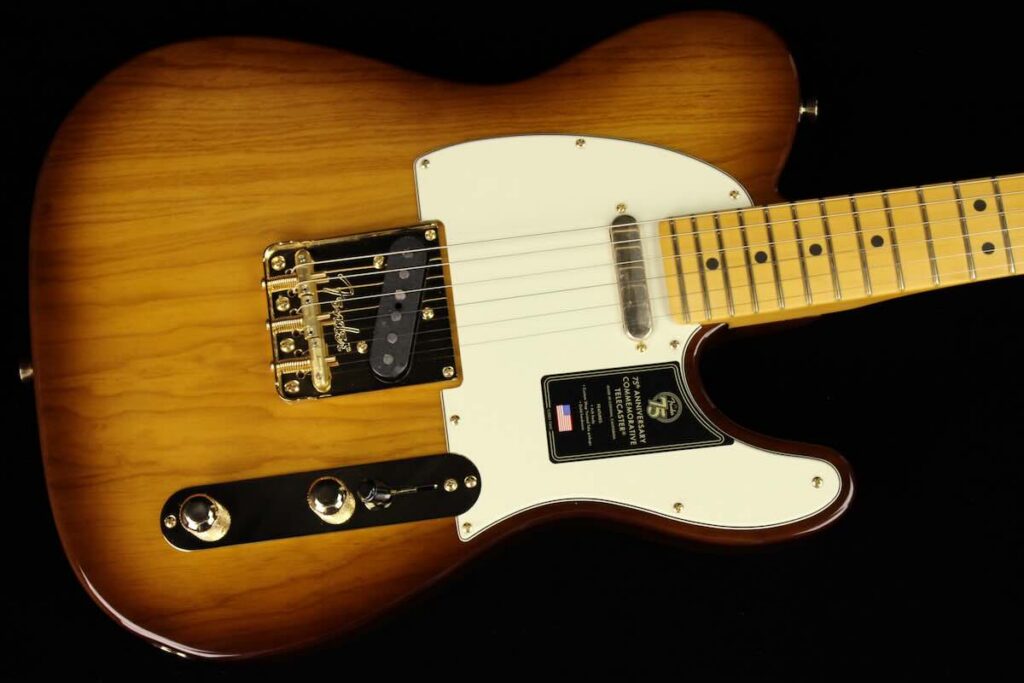
Believe it or not, this year marks 75 years since the Tele first appeared, and since then the instrument changed music in so many ways. That’s because a radio repairman named Leo Fender thought like an engineer instead of a traditional luthier.
Built Like A Tool From The Start
What made the Telecaster revolutionary was the fact that it was so practical. It was made for easy and inexpensive production, so much so that the wood was even chosen based on what was abundant at the time.
The original design, first called the Broadcaster, featured a solid ash body, a bolt on maple neck, and electronics that could be assembled and repaired quickly. If the neck warped, you didn’t need a new guitar. You just swapped it for another one, which was unheard of at the time.
The bridge plate was stamped metal and the control plate was mounted separately. The pickguard was simple and functional. Everything about the guitar screamed efficiency.
In many ways, the Telecaster was the first mass produced electric guitar that treated the instrument as a modular system. Today we take that for granted but back then, it was radical.
The Sound That Cut Through
Of course, none of this would have mattered if the guitar didn’t have a sound.
Because the Tele bridge pickup has a bite and presence like no other, it can slice through a dense mix without excessive EQ. It was great for country pickers, yet the bridge pickup with some of the tone rolled off was perfect for aspiring jazzers of the time.
In the studio, that means less fighting and more fitting. As mixers, we are always looking for sounds that occupy their own space, and the Tele seems almost pre EQ’d for that purpose.
From Country To Punk To Everywhere
One of the coolest things about the Telecaster is how it transcended genres.
Country players embraced it early because of its clarity and twang, and rock players discovered that a hot Tele signal into a cranked amp has that same clarity yet with an aggressive bite.
Artists like Bruce Springsteen, Keith Richards, and session greats such as James Burton showed that it could both be part of an identity and deliver both finesse and fire. There’s no elaborate electronics, no onboard processing, and no gimmicks. Just the player and their instrument.
Here We Are In 2026
Seventy five years later, the Telecaster is still in production, and going stronger than ever. There are more variations available than Leo probably could have every imagined.
Most gear has a lifecycle where it appears, becomes trendy, and then fades. The Telecaster has been in continuous use across multiple generations of players, producers, and engineers.
It succeeded because it solved real problems for working musicians. It was rather inexpensive, almost indestructible, reduced feedback, was easy to manufacture and repair, and had a distinctive sound.
It’s proof that thoughtful design and great sound will always outlast trends.
You can find some great info on the Fender Tele page, and hear about from Tele master Joe Bonamassa below.
