
- in Production by Bobby Owsinski
Jeff Graves Talks LUFS Mastering On My Latest Podcast
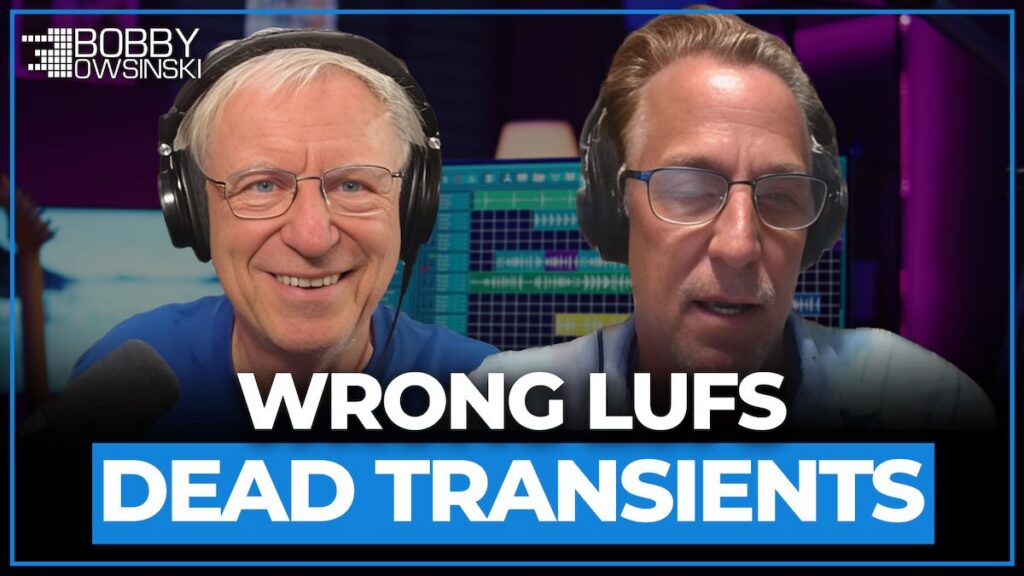
On this week’s podcast episode, mastering engineer Jeff Graves talks about what happens when independent musicians upload masters that are so hot that they lose transient detail the moment streaming platforms apply loudness normalization.
Jeff spent two and a half years measuring 214 audio fingerprints across 15 samples per genre to build a 24-stage AI mastering platform, and in this conversation he explains exactly why he belives delivering at the target LUFS level protects the dynamics and clarity that make a song translate from earbuds to car speakers.
His platform flags any process that compresses the loudness range by more than 1.5 LU, giving independent artists the transparency that black-box services have always withheld.
Jeff built LuvLang Studio after years of frustration with opaque online mastering services like Landr and eMaster, which he says run tracks through only seven or eight processes without explaining what they do.
His platform applies 24 named stages, measures LRA pre and post chain, and rejects uploads where headroom is insufficient rather than attempting to salvage a bad recording.
Users can choose single or album mode, blend a reference track via a percentage slider, and adjust a 7-band EQ.
Three output tiers cover MP3, 24-bit, and 24-bit with full options, with bundle pricing for multi-song projects. The platform also embeds metadata with track titles formatted exactly as the artist specifies and links directly to distributors such as CD Baby.
For bedroom producers who have never had a mastering budget, the educational layer built into this workflow may matter as much as the output file.
Every stage is named and visible, so each session teaches the vocabulary behind the decisions, things like why true peak spikes hiding between samples cause distortion only after a platform compresses the file, or why classical dynamic LRA typically falls between 10 and 20 LU while a heavily compressed master lands between 3 and 7.
Understanding those numbers gives an independent artist enough grounding to judge when a result is trustworthy and when it signals a problem upstream in the mix.
That’s exactly the kind of informed judgment that used to require a relationship with a professional facility.
You can hear it at bobbyoinnercircle.com, or via Apple Podcasts, Amazon Music, YouTube Music, Mixcloud, Spotify, Deezer, TuneIn Radio, or RadioPublic.
Also, a video version of this podcast is now available on YouTube as well.
